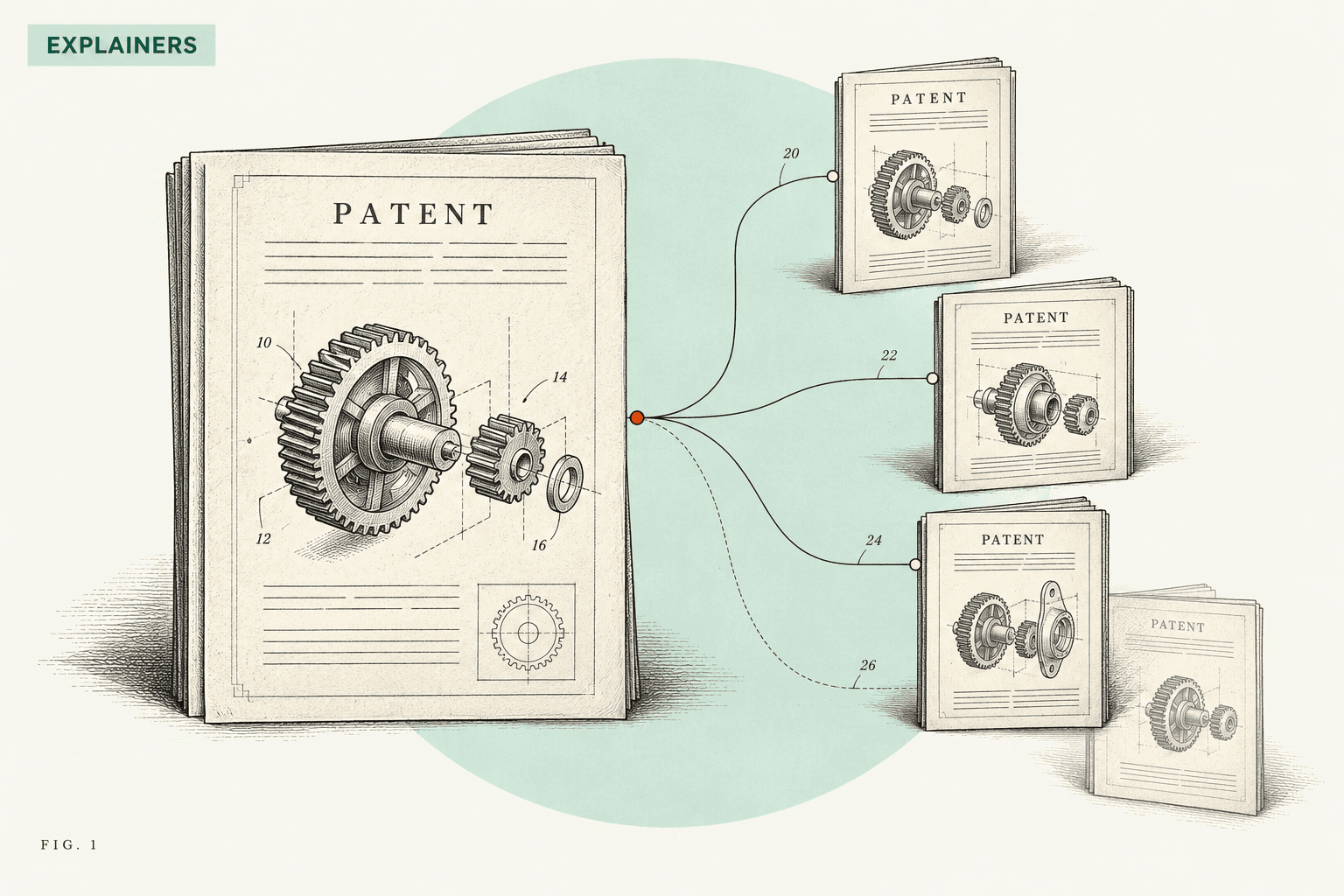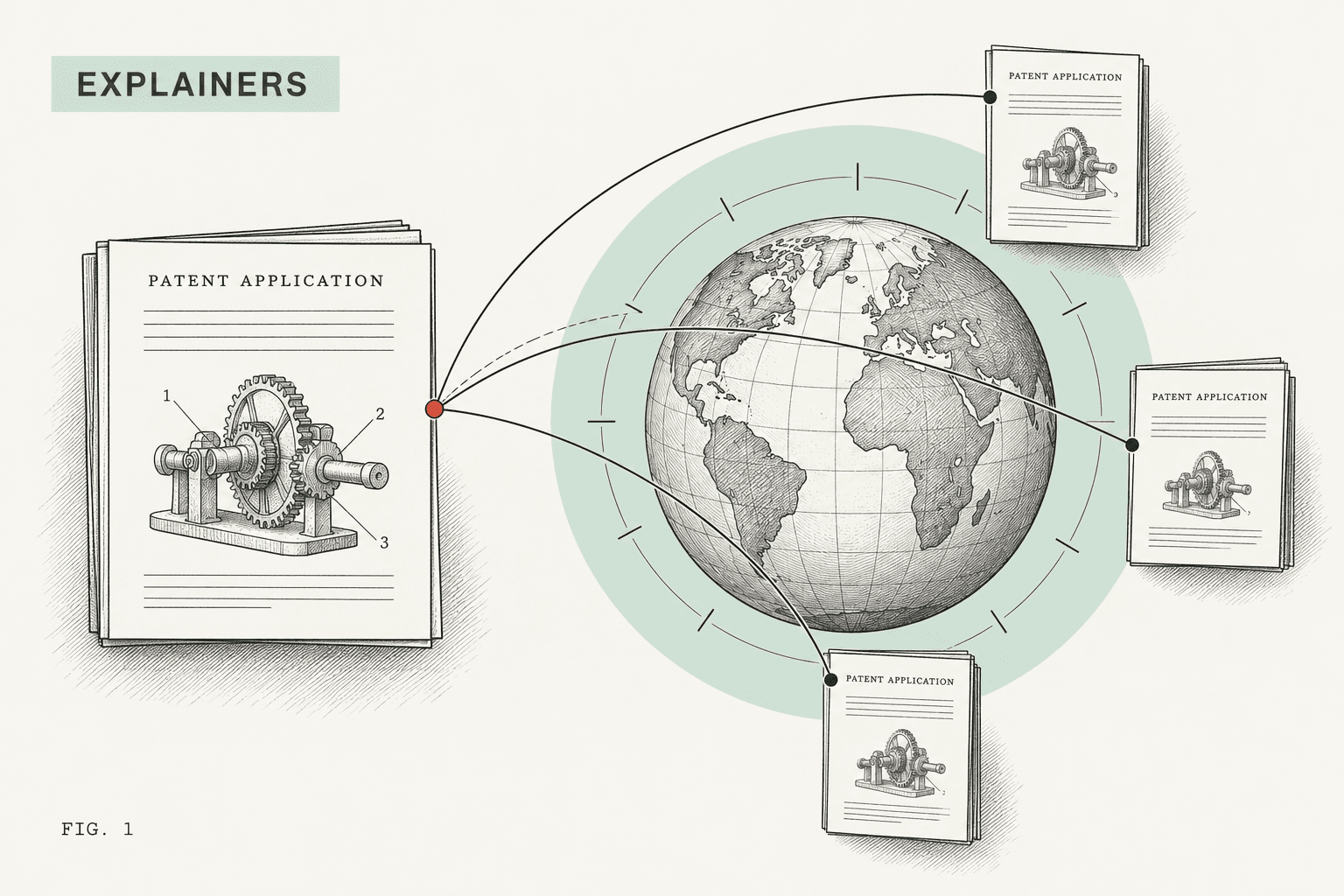
Full-scope enablement is the requirement that a patent’s specification teach a person skilled in the art how to make and use the entire range of what the claims cover, not only the embodiments the inventor built. The requirement comes from 35 U.S.C. § 112(a), which says the specification must describe the invention “in such full, clear, concise, and exact terms as to enable any person skilled in the art . . . to make and use the same.” The Supreme Court restated it in Amgen Inc. v. Sanofi, 598 U.S. 594 (2023): “If a patent claims an entire class of processes, machines, manufactures, or compositions of matter, the patent’s specification must enable a person skilled in the art to make and use the entire class.” More guides are on the Explainers hub.
What did Amgen v. Sanofi decide?
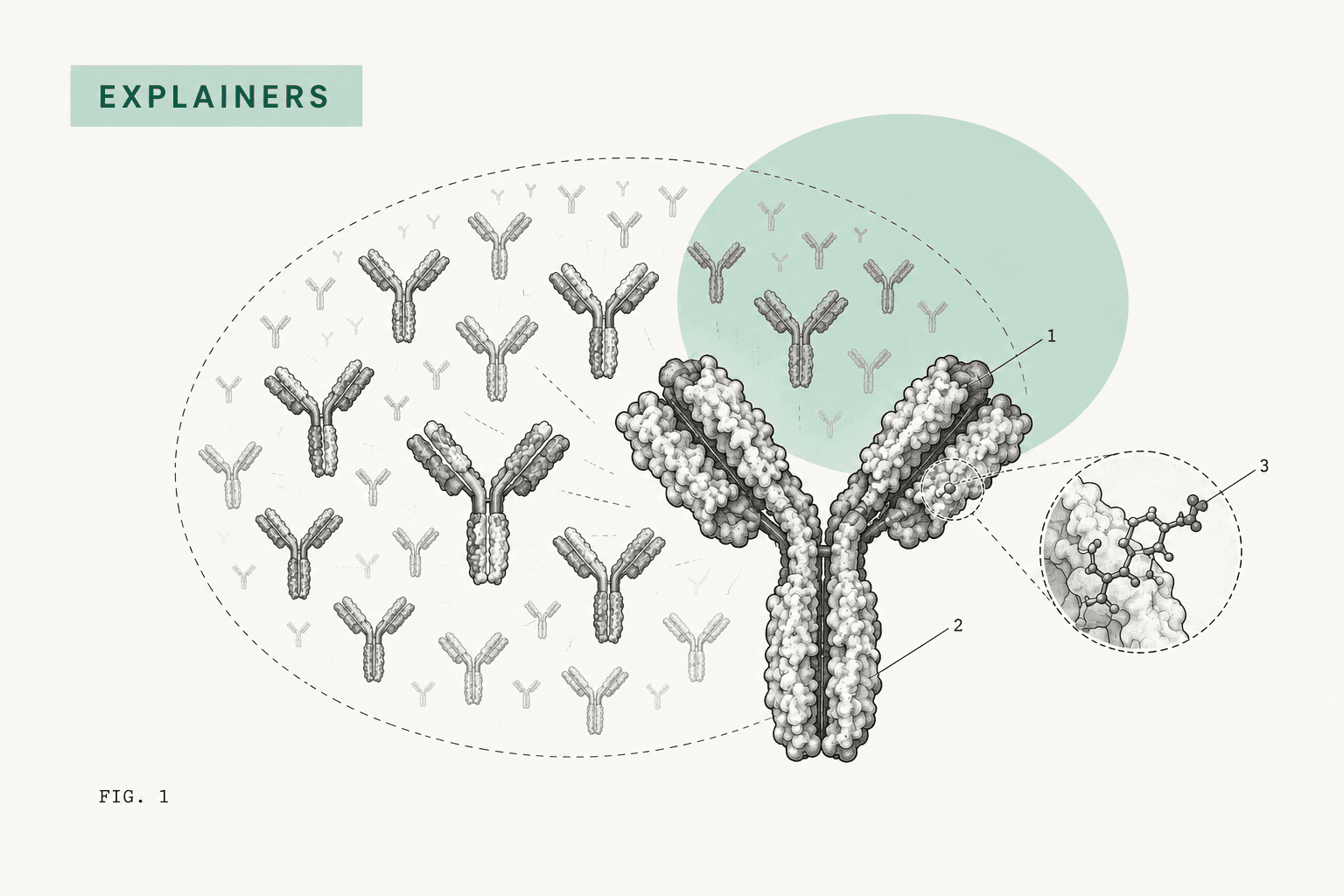
The Court held, unanimously, that Amgen’s claims to a genus of antibodies were invalid because the specification did not enable the whole genus. The claims covered every antibody that binds to particular amino acid residues on the PCSK9 protein and blocks it from binding to LDL receptors. Amgen had disclosed the amino acid sequences of 26 antibodies that do this, and two methods for finding more, which it called the “roadmap” and “conservative substitution.” The Court described those methods as “little more than two research assignments”: the roadmap “merely describes step-by-step Amgen’s own trial-and-error method for finding functional antibodies,” and conservative substitution requires scientists to alter known antibodies “and then test the resulting antibodies to see if they do too.”
The opinion grounds the rule in three older cases: O’Reilly v. Morse, The Incandescent Lamp Patent and Holland Furniture v. Perkins Glue. Each, the Court said, reinforces “the simple statutory command” that a claim to a class must be enabled across the class. The opinion’s summary of the rule is one sentence: “The more one claims, the more one must enable.” Where a specification leaves scientists to engage in “painstaking experimentation” to see what works, the Court wrote, “[t]hat is not enablement. More nearly, it is ‘a hunting license.’”
Does every embodiment have to be described?
No. The Court was explicit that the rule “is not to say a specification always must describe with particularity how to make and use every single embodiment within a claimed class.” An example or a few examples may suffice if the specification also discloses “some general quality . . . running through” the class that gives it “a peculiar fitness for the particular purpose,” the Court wrote, quoting Incandescent Lamp. And “[a] specification may call for a reasonable amount of experimentation to make and use a claimed invention, and reasonableness in any case will depend on the nature of the invention and the underlying art.” The line Amgen draws is between adaptation or testing within a disclosed teaching, which is permitted, and open-ended discovery of which members of the class work, which is not.
How does the USPTO apply it during examination?
Through the Wands factors, which the Office confirmed remain the framework in its Guidelines for Assessing Enablement in Utility Applications and Patents in View of Amgen, published in the Federal Register on 10 January 2024 (89 FR 1563). MPEP § 2164.01(a) lists them: the breadth of the claims; the nature of the invention; the state of the prior art; the level of ordinary skill; the level of predictability in the art; the amount of direction provided by the inventor; the existence of working examples; and the quantity of experimentation needed to make or use the invention. The question these factors answer is whether the experimentation required is “undue,” the standard the MPEP traces to Minerals Separation v. Hyde (1916) and In re Wands (1988).
MPEP § 2164.08 states the full-scope principle in examination terms: “The focus of the examination inquiry is whether everything within the scope of the claim is enabled,” so “the first analytical step requires that the examiner determine exactly what subject matter is encompassed by the claims.” The MPEP’s example is AK Steel v. Sollac (Fed. Cir. 2003), where claims covered aluminium coatings with up to 10% silicon while the specification warned that more than 0.5% caused coating problems. The examiner bears the initial burden under MPEP § 2164.04 to give a reasonable explanation of why the claimed scope is not enabled; the applicant then responds with evidence or amendment.
How do courts apply it to mechanical and electrical claims?
The same way, with less tolerance for unsupported alternatives. The clearest recent example is Satius Holding, LLC v. Samsung Electronics Co., decided by the Federal Circuit on 1 October 2026. The claim recited an apparatus for “transmitting electric or electromagnetic signals over air,” and both sides agreed that transmitting electric signals over air is impossible. Quoting Amgen, the court held that the full-scope standard “cannot possibly be met when, as here, the claims include an express limitation that adds inoperable (and thus non-enabled) alternative embodiments to the scope of the invention,” and that the claims “fall woefully short.” The site’s analysis of Satius covers the indefiniteness holding that preceded it.
Satius drew on two earlier Federal Circuit lines, which it read alongside Amgen. In Liebel-Flarsheim v. Medrad (2007), a claim that covered injector systems with and without a pressure jacket was not enabled because the specification taught only the jacketed version; the court required “reasonable enablement of the scope of the range.” In EMI Group v. Cypress Semiconductor (2001), quoting Process Control v. HydReclaim (1999), the court said that when “an impossible limitation, such as a nonsensical method of operation, is clearly embodied within the claim, the claimed invention must be held invalid.” Satius places both principles under Amgen’s general statement.
What does this mean for how claims are drafted?
The drafting consequence is that every word that widens a claim also widens what the specification must teach. Several patterns recur in the decisions above and may be worth checking before filing.
Disjunctive alternatives. A claim to “A or B” is enabled only if both A and B are. Satius is the extreme case, where B could not exist, but Liebel-Flarsheim shows the ordinary one: a disclosed embodiment with a feature and a claim that also covers its absence. Practitioners may consider whether the specification describes, or at least gives the skilled person a way to reach, every alternative recited.
Functional genus claims. Amgen’s claims defined antibodies by what they do rather than what they are. The Court did not forbid functional claiming. It said that methods like Amgen’s roadmap “might suffice to enable other claims in other patents,” for instance where “the inventor identifies a quality common to every functional embodiment,” but that they did not here. One reading is that claims defined by a structural feature which the specification links to the function sit on firmer ground.
Ranges and open-ended terms. Under MPEP § 2164.08 and AK Steel, a claimed range is examined across its breadth, and statements in the specification that part of the range does not work are evidence against enablement. “At least,” “up to” and “comprising” language expands scope in the same way. Where the specification only supports part of a range, dependent claims with narrower limits preserve something if the broad claim falls, as claim 5 did in a different context for Agfa in the UPC Court of Appeal.
Predictability of the art. The Wands factors make the level of predictability a variable, and MPEP § 2164.03 states that the amount of guidance needed “is inversely related to the amount of knowledge in the state of the art as well as the predictability in the art.” A mechanical claim can often rely on the skilled person to fill gaps that a biological claim cannot. But the Satius panel treated an electrical claim no more gently than Amgen treated an antibody claim once the unsupported alternative was express.
What are the common mistakes?
The decisions point to a handful. Claiming the result rather than the means, so that the claim covers every solution to the problem while the specification teaches one. Adding alternatives to a claim late in prosecution without checking that the filed specification supports them. Describing a screening or trial-and-error method as if it were a teaching of how to make the class. Writing a preamble or purpose clause that covers more than the body of the claim can deliver, as in Satius. And relying on the predictability of the art without evidence, when the examiner has already explained under MPEP § 2164.04 why the scope appears unsupported.
The requirement is not new, and the oldest of the cases the Court relied on dates from 1854. What Amgen changed is the clarity of the statement and the weight courts and examiners now give it. The Federal Circuit’s application in Satius, three years on, suggests that any claim language adding scope the specification does not reach will be tested against that statement first. The Federal Circuit hub tracks the decisions as they issue.
Documents
- Amgen Inc. v. Sanofi, 598 U.S. 594 (2023), opinion text
Supreme Court, May 18, 2023, via Legal Information Institute
- 35 U.S.C. § 112
Specification; enablement is § 112(a)
- MPEP § 2164, The Enablement Requirement
USPTO MPEP, sections marked R-01.2024
- Satius Holding, LLC v. Samsung Electronics Co., No. 2025-1446
Fed. Cir. Oct. 1, 2026, precedential

Staff · Patent decisions, prosecution practice and AI in patent work
Stories under this byline are reported from the primary documents: Federal Circuit opinions, PTAB decisions, USPTO notices and European rulings.
Read more from EditorSpotted an error? Read our editorial standards and corrections policy, or send us a tip.